
Kitchen & Bath
Custom Wine Cellar Cabinetry in Lexington, KY
Lexington Custom Cabinets designs and builds custom wine-cellar cabinetry and racking for homeowners who want bottle storage, display, tasting, case storage, lighting, and surrounding millwork designed as one finished room. We plan the cabinetry around the collection, bottle formats, cooling environment, architecture, and visual direction you want rather than treating the cellar as rows of generic racks.
Request a free quote
Tell us the room and rough size.
Custom Wine Cellar Cabinetry Lexington KY
The design can be traditional and cellar-like, contemporary and minimal, or integrated with the rest of the home's millwork. Natural white oak, walnut, stained hardwood, metal accents, glass enclosures, display ledges, case bins, illuminated bottle walls, and tasting cabinetry can all be combined into a tailored composition. We work through material and finish samples so the racking, floor, walls, lighting, and adjacent spaces feel related.
Storage is planned around the collection you actually own and how you want to access it. Standard bottles, larger formats, case storage, feature bottles, everyday selections, and long-term holdings can be separated into zones that balance capacity with presentation. Cooling equipment, airflow, door locations, lighting, and service access are coordinated with the millwork before fabrication.
Lexington homes offer different settings for a cellar, from finished basements in established houses to dedicated wine rooms in newer construction. Custom cabinetry lets the room respond to ceiling height, existing architecture, circulation, and the desired level of display instead of forcing a predesigned rack system into the space.
Types of Wine Storage We Build
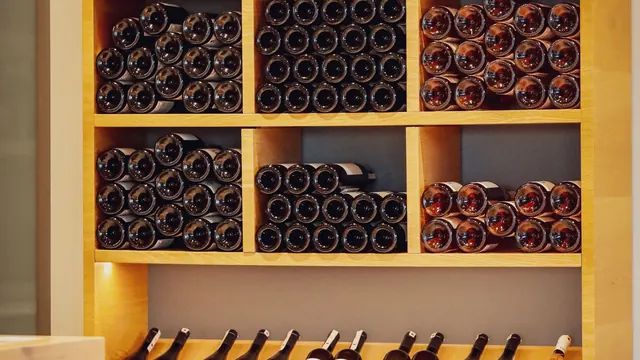
Individual Bottle Racking
Each bottle in its own cradle, stored horizontally so the cork stays wet. The most space-hungry method and the best for a collection you actually browse.
Diamond Bins
Cross-hatched bins holding bottles in bulk. Far more efficient per cubic foot, better for case quantities of the same wine.
Case Storage and Bulk Shelving
Open shelving sized to standard wooden and cardboard cases, for wine bought by the case and not yet unpacked.
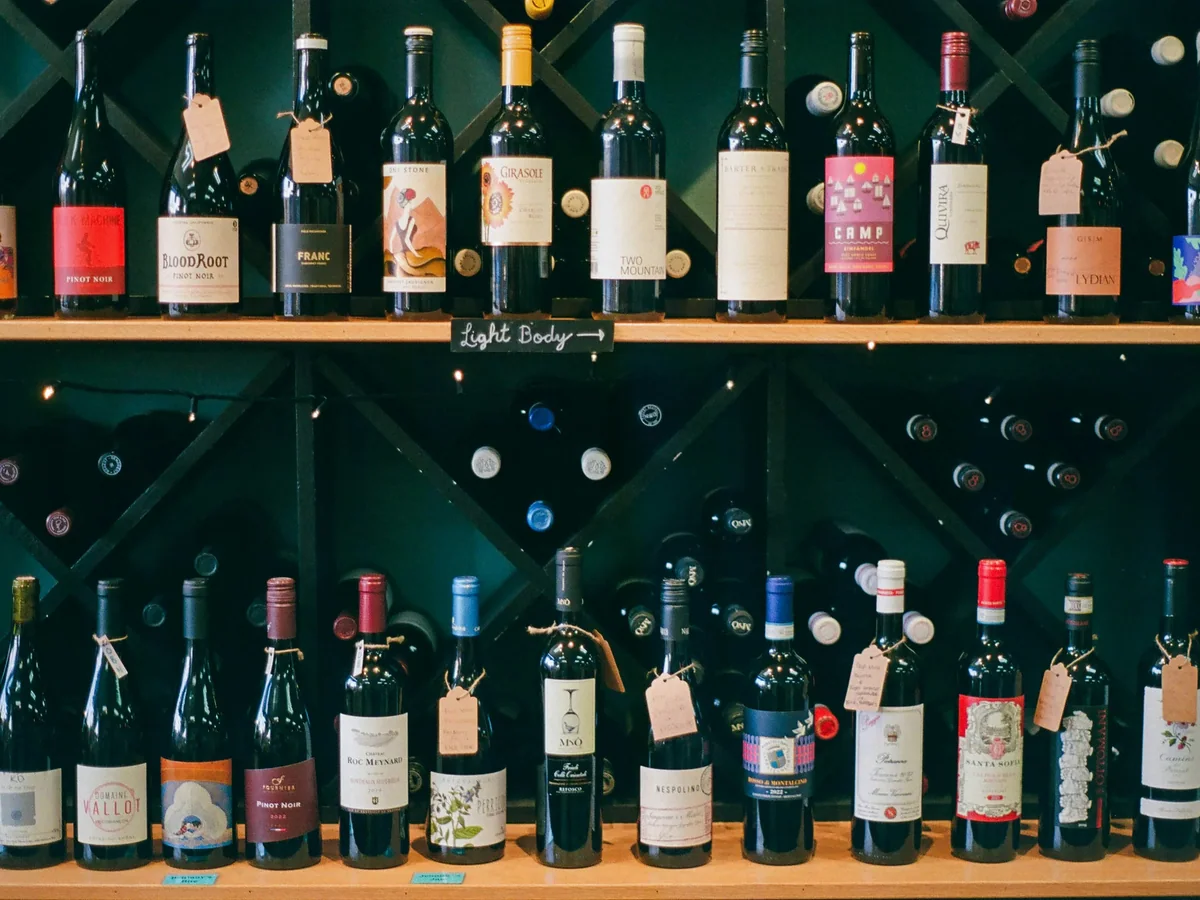
Display Rows and Label-Forward Racking
Angled shelving that presents the label rather than the base. Used sparingly, because it costs a lot of wall for few bottles.
Tasting Counters and Service Areas
A work surface with drawers for openers, stemware storage, and sometimes a small sink. The part of the room people actually use.
Wine Cellar Features and Accessories
Stemware Storage
Under-shelf racking that holds glasses by the foot, kept out of the coldest part of the room.
Integrated Lighting
Low-heat LED, because incandescent lighting in a sealed cellar is a temperature problem. Lighting on a switch rather than always-on, since light degrades wine.
Rolling Ladders
For racking that runs full height. Needs a rail rated for the load and a floor that will take the wheels.
Drawer Storage
Openers, foils, stoppers, and notebooks. A small thing that stops the tasting counter becoming a dumping ground.
Glass Enclosure Walls
Where the cellar is on display rather than hidden. The glass has to be insulated and sealed or the room will not hold conditions.
Racking, Door and Display Options
Open Racking
Most of a cellar is open by necessity, since airflow around bottles matters and doors would trap heat.
Glass Cellar Doors
Insulated and fully sealed. A standard interior door will not hold cellar conditions and will run the cooling unit continuously.
Closed Base Cabinetry
Doors and drawers below the tasting counter for the things that are not wine.
Wine Cabinet Alternatives
Where a dedicated room is not possible, a conditioned wine cabinet built into existing millwork stores a smaller collection properly.
Wine Cellar Materials and Finishes
Species selection in a cellar is about stability at humidity and about odour. Redwood and mahogany are the traditional cellar species precisely because they tolerate damp without moving much and are effectively odour-free. White oak works and is more readily available. We avoid strongly aromatic species entirely, because a sealed room concentrates any odour and wine takes it on through the cork. Finishes are chosen the same way: low-odour and low off-gassing, or in traditional cellars left unfinished. A heavily solvent-finished rack in a sealed room is a genuine mistake.
Wine Cellar Design Directions
Traditional Cellar
Stained mahogany or redwood, individual cradles, arched display rows, warm low lighting. The classic look and still the most requested.
Contemporary Glass Room
A glass-walled cellar as a feature within a living space, with metal and wood racking and clean horizontal lines.
Bluegrass Estate
Heavier millwork, a substantial tasting counter, and integration with surrounding cabinetry. Suits the larger Woodford and Bourbon County houses.
Compact Under-Stair
Racking fitted to the awkward triangular volume under a staircase, which is otherwise dead space in most houses.
Before We Build Your Wine Cellar
A cellar is a building-envelope project as much as a cabinetry one, and the cabinetry is usually the last thing to go in. Before building we confirm:
- Whether the room is insulated and vapour-sealed, because racking cannot fix an unsealed room
- The cooling unit specification and where its airflow lands, since racking must not block it
- Your actual bottle sizes, including how many magnums and oddly shaped bottles you keep
- Total bottle count you are planning for, and how much of it is case storage versus browsing
- Floor construction and load, because a full cellar is much heavier than people expect
- Whether the room is on display, which changes glass, lighting, and finish decisions
How Your Wine Cellar Project Works
Measure and count
We measure the room and establish the real collection profile, because a browsing collection and a case collection need completely different racking.
Drawings and samples
A rack layout showing capacity by type, plus species and finish samples chosen for a humid, sealed environment.
Field verify
Insulation, vapour seal, cooling unit position, and floor load confirmed before fabrication.
Build, finish, install
Built and finished off site, then installed and secured to the structure. Racking gets anchored, because a loaded rack is heavy.
Common questions
Custom Wine Cellar FAQs
What temperature and humidity should a wine cellar hold?
Why does wine cellar cabinetry use different wood?
How many bottles will my space hold?
Can I put a wine cellar under my stairs?
Do I need a cooling unit or is a basement cold enough?
Get a quote on your wine cellar
Tell us the room, your bottle count, and how much of your collection is case storage. We will map the capacity before quoting.