
Commercial & Care
Cabinet Painting & Refinishing in Lexington, KY
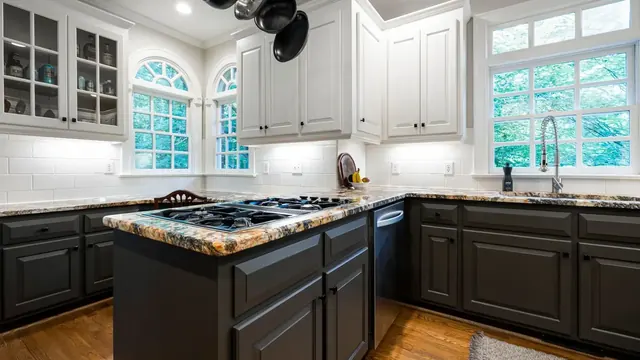
Lexington Custom Cabinets refinishes and paints existing cabinetry for homeowners who like the layout and construction they already have but want a more polished color, sheen, and overall design direction. We help determine whether the cabinetry is a good refinishing candidate, then coordinate color, hardware, surrounding finishes, preparation, spraying, and reassembly so the room feels intentionally renewed rather than simply repainted.
Request a free quote
Tell us the room and rough size.
Cabinet Painting & Refinishing Lexington KY
A refinishing project should begin with the look you want to create. Some kitchens benefit from a clean warm white, soft neutral, or deeper painted color; others are better served by preserving natural wood and restoring the finish. We look at the countertops, backsplash, flooring, lighting, adjoining rooms, and door profile before recommending a direction, because the cabinet color has to work with the whole room.
The craftsmanship is in the preparation and finish quality. Doors and drawer fronts are removed and labeled, surfaces are cleaned and prepared for adhesion, damaged areas are corrected where practical, and the finish is applied for an even cabinet-grade appearance. Hardware can be updated at the same time so the new color and the details around it read as one coordinated project.
Lexington's older H-1 districts and established neighborhoods contain many homes where existing cabinetry, trim, and room proportions are worth working with rather than replacing automatically. In newer homes, refinishing can also be a strong choice when the layout is good but the original finish no longer fits the homeowner's taste. The decision starts with what is worth keeping, not with a default recommendation to tear everything out.
Finish Systems and Colour Options
Finish system matters more than colour. Conversion varnish and catalyzed lacquer both cure hard and resist the moisture, heat, and handling a kitchen delivers. Waterborne acrylic systems have improved considerably and are a good choice where odour and cure time matter, such as an occupied home. Standard wall paint on cabinet doors is a mistake regardless of how good the brand is, because it stays comparatively soft and marks under fingernails. Colour is largely free choice, though very dark colours show dust and very high sheens show every imperfection in the substrate beneath them.
Refinishing Style Directions
Painted Over Stained Oak
The most common request we get. Oak grain will telegraph through paint unless it is grain-filled first, and we will tell you which you are choosing rather than letting you discover it afterwards.
Two-Tone Kitchens
Perimeter in one colour and island in another, which costs little extra in a refinishing job since the doors are all off anyway.
Restained Rather Than Painted
Where the wood is worth showing, stripping and restaining keeps the grain visible. More labour than painting, and worth it on cherry or quarter-sawn oak.
Refresh in Place
Where the existing colour is fine and the finish has simply worn, a clean, scuff, and recoat in the same colour restores it for considerably less.
When Refinishing Makes Sense in Lexington Homes
Lexington's older neighborhoods contain cabinetry that is worth evaluating before demolition, particularly face-frame work, built-ins, and kitchens where the layout still functions. A tired clear finish, yellowed paint, or worn areas around the sink and range can be a finishing problem rather than a cabinet-construction problem. In those rooms, careful prep and spraying can preserve more of the house while changing the way the space reads.
Later ranches and suburban homes create a different case. The boxes may be serviceable while the color, sheen, exposed hinges, or door profile dates the room. We inspect the substrate and condition first, because refinishing only makes sense when the existing surfaces can be prepared properly and the layout is still worth keeping.
Before We Refinish Your Cabinets
This is the part of the job that determines whether the finish lasts, and it is also the part clients never see. Our preparation covers:
- Full degrease of every surface, with particular attention around the range and above it
- Scuff-sanding to give primer a mechanical key rather than relying on adhesion alone
- Grain filling where oak or ash is being painted, so the grain does not telegraph through
- Repair of chips, dents, and failed joints before any finish goes on
- Removal and labelling of every door and drawer front so they return to the right opening
- Masking and containment, since spray overspray travels further than people expect
How Your Refinishing Project Works
Assess and test
We check what finish is currently on the cabinets, because some old finishes need specific preparation, and confirm the substrate is sound.
Colour and sheen samples
Sprayed samples in your kitchen's own lighting, since colour reads very differently under a north window than under warm downlights.
Prep, prime, spray
Doors removed and labelled, everything degreased and scuffed, then primed and sprayed flat off site for an even film.
Rehang and adjust
Doors returned to their original openings, hinges adjusted in all three planes, and hardware refitted.
What We Evaluate Before Repainting Existing Cabinetry
A repaint starts with the cabinet surface, not the color card. We check whether the existing coating is sound, whether grease or silicone contamination is present, how much grain will remain visible, and whether damaged edges or joints need repair first. Those conditions determine the preparation required for a finish that looks intentional instead of simply covered over.
We also look at whether the door style and room still support the finish you want. A cleaner painted palette can make older cabinetry feel lighter, but refinishing cannot correct poor clearances, undersized storage, or a layout that fights the way the kitchen is used. When those are the real problems, we say so before the finishing work begins.
Common questions
Cabinet Painting and Refinishing FAQs
Why do painted cabinets peel?
Can I paint my oak cabinets?
Is sprayed better than brushed?
Can I just use good wall paint?
How long does refinishing take?
Get a quote on cabinet refinishing
Send photos of your cabinets, including close-ups near the range. The current finish and the grease load determine the preparation.