
Specialty Millwork
Custom China Cabinets in Lexington, KY
Lexington Custom Cabinets designs and builds custom china cabinets and display cabinetry for homeowners who want dining storage to feel like furniture made for the room. We create freestanding-looking built-ins, full-wall display cabinets, glazed uppers, lower buffets, serving storage, and integrated lighting around the collection, the architecture, and the style you want to see every day.
Request a free quote
Tell us the room and rough size.
Custom China Cabinets Lexington KY
A china cabinet can be formal and traditional, lighter and transitional, or clean enough to work in a contemporary dining space. Glass type, door profile, shelf material, interior finish, hardware, lighting, crown, base, and the balance between open display and closed storage all change the character of the piece. We work through samples and proportions before fabrication so the cabinet feels designed rather than oversized or ornamental by default.
Storage is planned around the pieces that matter to you. Platters, serving ware, glassware, linens, silver, and everyday dining items can be separated into drawers, adjustable shelves, deep lower cabinets, and illuminated display areas. The result can function as both storage and a focal point without sacrificing either role.
In Lexington's older dining rooms, especially in established neighborhoods and historic districts, a custom china cabinet can be proportioned to existing casing, baseboard, ceiling height, and formal room scale. In newer open dining areas, the same service can create a visual anchor and introduce the kind of built-in detail the floor plan may not already have.
Types of China and Display Cabinets We Build
Built-In China Cabinets
Fitted into a wall or recess so the cabinet reads as architecture rather than furniture. The most common request in period houses.
Buffet and Hutch Combinations
A base buffet with a glass-front display hutch above, which combines storage and display in one elevation.
Corner China Cabinets
Fitted to a corner, which uses space that furniture handles poorly. Traditional in Federal-period rooms.
Glass Display Towers
Full-height glazed units, often flanking a buffet or a doorway.
Concealed China Storage
Solid-door cabinetry with fitted plate and stemware storage inside, for collections that are used rather than displayed.
China Cabinet Features and Accessories
Tempered Glass Shelving
Sized to the span and the load, tempered so it fails safely. Adjustable on pins rather than fixed.
Mullioned and Divided-Light Doors
Wooden bars dividing the glazing, which is the period-correct detail in traditional dining rooms.
Interior LED Lighting
Low-heat lighting that makes the display work after dark, wired by a licensed electrician.
Mirrored Backs
Roughly doubling the apparent depth of the cabinet and reflecting the interior lighting.
Plate Grooves and Racks
A shallow groove in a wood shelf that holds plates upright on display rather than stacked flat.
Glass, Door and Shelving Options
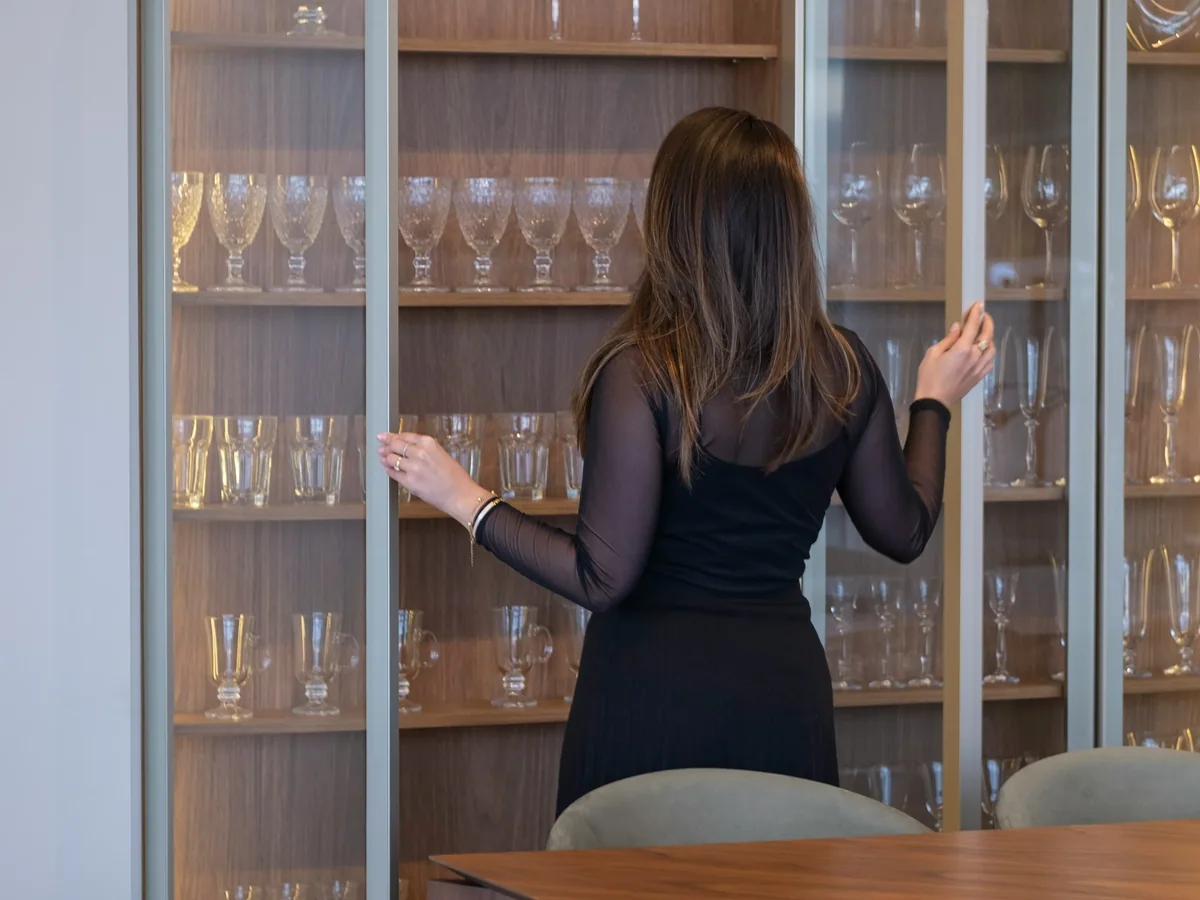
Mullioned Glass Doors
Divided by wooden glazing bars. Period-correct and the most requested treatment in the region's older houses.
Single-Pane Glass Doors
One clear pane per door, which reads contemporary and shows more of the contents.
Seeded and Reeded Glass
Textured glazing that obscures partially. Seeded reads antique; reeded reads current.
Solid Doors with Fitted Interiors
Where the china is used rather than displayed, closed doors with fitted plate and stemware storage inside.
China Cabinet Materials and Finishes
China cabinets are usually in the most formal room in the house, so profile and species matching matter. Cherry darkens with age and suits a Federal interior. Painted poplar with an inset door suits a Victorian or Greek Revival room. Quarter-sawn oak is right in a Craftsman house. Interiors are frequently painted a lighter tone than the exterior even in a stained cabinet, because a dark interior swallows the display. Glass is tempered for shelving as a safety requirement, and door glazing thickness is chosen for the pane size and the mullion pattern.
China Cabinet Design Directions
Federal and Traditional
Mullioned doors, cherry or painted poplar, cornice detailing, and adjustable glass shelving. Correct in the region's oldest houses.
Victorian Display
Taller proportions, more elaborate glazing bars, and often a mirrored back. Suits the Victorian stock in Paris, Cynthiana, and Old Louisville.
Craftsman
Quarter-sawn oak with simple vertical glazing bars and minimal ornament.
Modern Display
Single-pane doors, slim frames, integrated lighting, and a painted or rift oak carcass.
Before We Build Your China Cabinet
The main risk with a display cabinet is building shelving that cannot carry what goes on it, so we start with the collection. We confirm:
- What is being displayed and roughly what it weighs, since a full dinner service is heavy
- Required shelf spans, which determine glass thickness or whether wood is better
- Cabinet depth needed for the largest piece, usually a platter or a tureen
- Whether the cabinet is lit, which means an electrician and a low-heat specification
- Existing trim profiles to match, taken physically rather than from a photograph
- Wall construction, since a tall glazed cabinet must be anchored into structure
How Your China Cabinet Project Works
Measure and assess the collection
We measure the space and look at what is going in, because the largest piece sets the depth and the total weight sets the shelving.
Drawings and samples
An elevation showing glazing pattern and shelf spans, plus profile and finish samples matched to the room.
Field verify
Wall structure, trim profiles, and electrical provision confirmed before fabrication.
Build, finish, install
Built and finished off site, then set, scribed, and anchored. Glass is fitted last and shelving load-checked.
Common questions
Custom China Cabinet FAQs
Does china cabinet shelving need to be tempered glass?
How thick should glass shelves be?
How deep does a china cabinet need to be?
Should the cabinet be lit?
Can you match a china cabinet to my existing dining room?
Get a quote on your china cabinet
Tell us what is being displayed and send the wall dimensions. The largest piece sets the depth and the total weight sets the shelving.